
This is an edited and updated version of the original post which was published on my original blog ‘sailingsouth.org’ in May 2023.
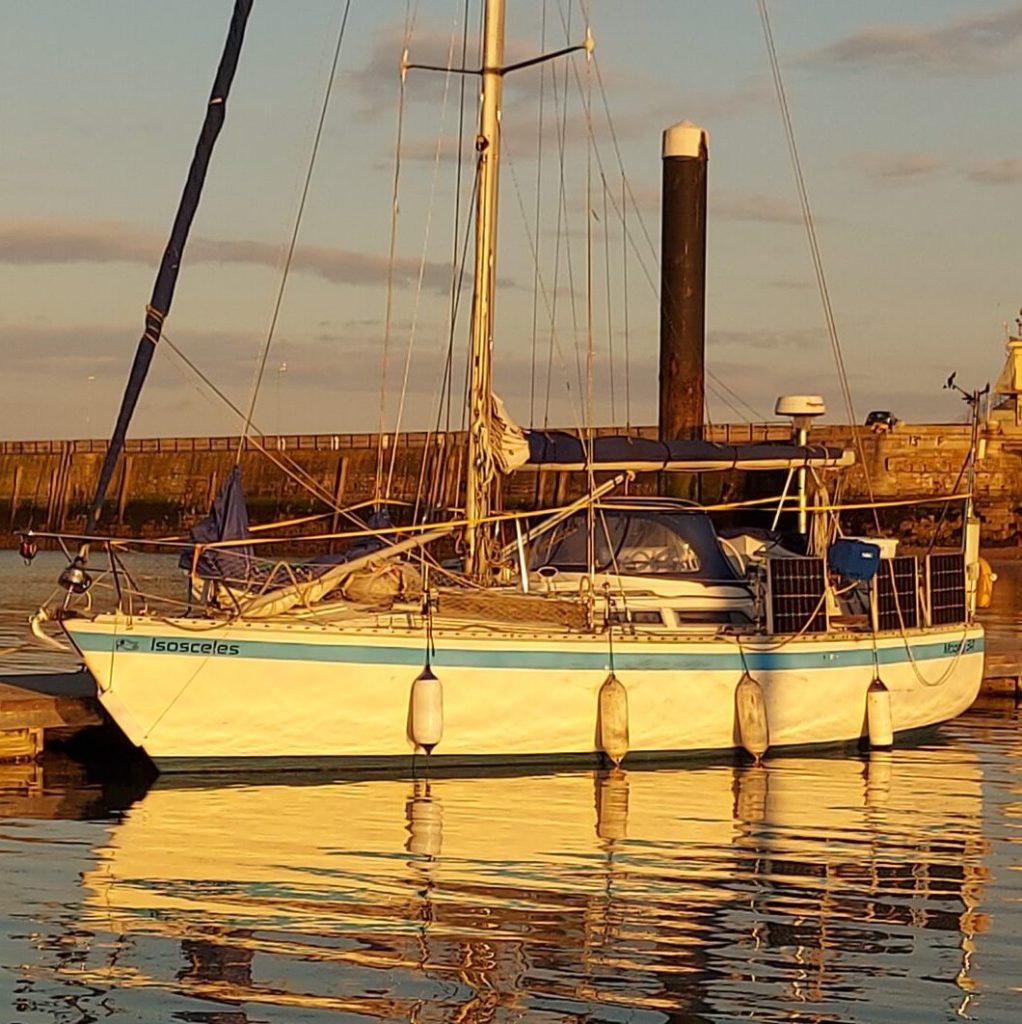
I started this week holed up in Sovereign Harbour at Eastbourne. The wind was being uncooperative, not for the first time this year, or indeed the last I’m sure.
I managed to cast off the lines again on Sunday (14th May). Leaving through the lock at Soverign Harbour was a challenge. This was not helped by the arrogance of one individual fishing boat skipper. He’d entered the lock in front of me and left a space that was just long enough for me, tucked into the alcove in the side of the lock, tight by the entrance. There was no way a sailboat was going sideways into that space. I asked if I could pull up along side him but got snarled at in reply. He clearly thought I might delay his fishing trip by a few seconds.
I managed to put the front of my boat into the side behind him. It wasn’t until his fishing charter customers started to help me he lent a hand, all be it begrudgingly. A sail boat with a big fin for a keel (which is there to keep a boat going straight) does not go sideways. Power boat with multiple engines and a shallow, V shaped bottom are much more manoeuvrable in these situations.
The difference between this guy and the consideration of the fishermen who helped me on my way in was stark. The comment from the lock keeper after he had left showed that he was well known for his ignorance.
Once out of the harbour and motoring along the channel, there were lobster and crab pot marker buoys both sides. There were even some right along the edge of the channel, dangerously close to the marked channel.
Once I got to the end of the channel it became a free for all. There were jerrycans of all colours waiting to ensnare an unsuspecting boats propeller. It was like a slalom course. I was scanning ahead intently in the rolling seas as I was steering around these obstacles. Eventually, you start to see shadows and pot markers where there are none. This is a hazard that affects every shallow coastline, both here and abroad. But I have never seen them so close to marked channels in and out of harbours.

Rounding Dungeness head I was motoring along in clear blue sky, calm seas and no wind. However once past, the weather took a turn. While I remained in that clear blue sky, the land off to the north of the boat disappeared behind a curtain of rain and haze. For the rest of the trip, I had no sight of land until I was 2 or 3 miles off Dover.
Entering Dover wasn’t the hassle I feared. You have to notify the harbour control about 2 miles off with your intended entrance (there’s a choice of two), or tell them if you’re continuing on. Then you call them again when you’re about 200 meters off to get clearance to enter the harbour. Dover is the busiest ferry port in Europe, as well as having cruise ships and cargo ships coming and going. Harbour control are very friendly towards yachts, but it pays to be out of the way with some of these big ships moving about.


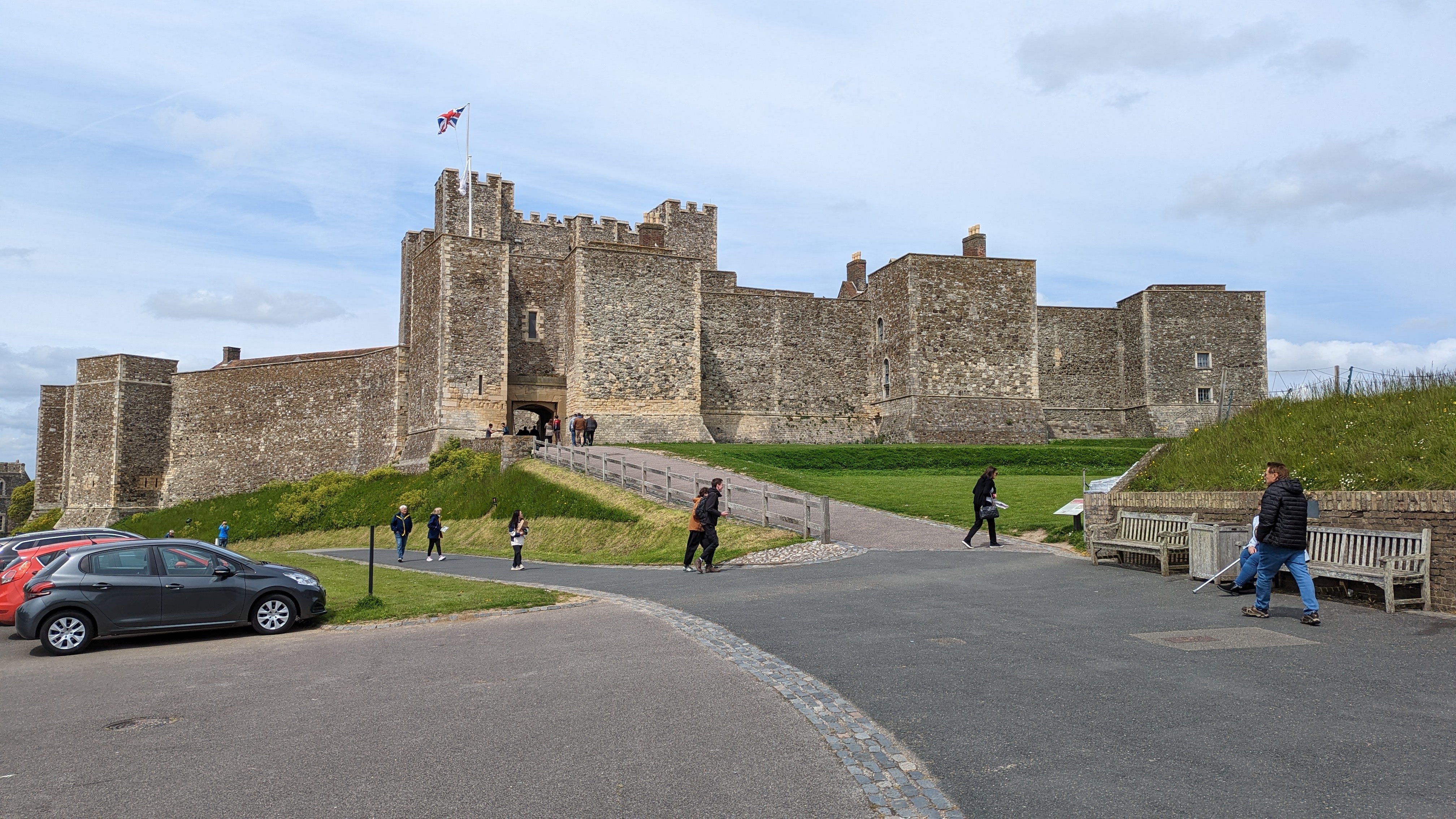
I spent a day in Dover, including a trip up to the castle. The walk up the hill was not far, but steep, real steep. I really must keep working to improve my fitness, years of working night shifts and doing very little else have taken their toll.

Dover Castle has a long history, and was a military establishment up to and including the cold war. Unfortunately you can’t get into the cold war bunkers (as yet, maybe one day). However there are lots to see. There is the medieval castle and the WW2 tunnels and operations rooms you can explore. Buildings on the site date back to Roman times with the ruins of the lighthouse. Well worth a visit in my view.


Tuesday was a short potter round to Ramsgate. For once I had great sailing weather apart from the wind being directly in front of the boat. I could have zig-zagged my way up the coast. However, with cliffs on one side and Goodwin Sands, the graveyard of at least 2000 ships, on the other I decided that I’d rather motor the 3 hours along the coast. Maybe if I hadn’t been sailing alone I would have sailed, but that cautious side of me is still strong. Ramsgate is an okay place, but if I’m honest it is nothing special. I did visit the sailors church and have a wander around the town, but it isn’t somewhere I’d go out of my way to visit again. It’s a handy stopping place for sailing, and has a lot of watering holes, but that’s about it.


The Thames Estuary
Crossing the Thames estuary has been a little bit of a daunting thought. There are mud and sand banks in abundance, as well as the shipping channels going in and out of the London ports. I planned my route sticking to the main channels well aware that this might be busy with shipping. However without local knowledge, and a very up-to-date pilot book, I was not going to mess with these shifting sand banks. I’m sure there are many short cuts I could have taken. I planned my arrival at Felixstowe and the river Orwell to coincide with the beginning of the rising tide to take me up the river to Levington Marina.

The trip started off how I had expected. As I went past North Foreland I could see a line of 11 ships going in various directions. Thank goodness for the AIS* receiver I had fitted earlier in the year. I could tell that some of them were anchored and not moving, others were crossing my path. I also had the tide going into London pulling me to one side.
*Note (and maybe a bit of a rant!): AIS is an Automatic Identification System. All ships transmit their ID, speed and direction, among other details. I can pick this up on the electronics system and tell who is moving, in what direction and how fast. Small boats like mine are not required to transmit this information. However, there are the “must have all the gadgets and gizmo’s” sailors. They have the transmitters, and just end up cluttering up the information screens. This makes the system useless. In the Solent for example everyone is heading towards everyone else at some point. The water is just so congested. So collision avoidance alarms are going off constantly, filling the air with beeps and flashing displays. Enough to distract even the most hardened of skippers. In practice, people turn off the collision alarms, and so if a ship is heading towards you the system won’t tell you.
As I sailed past the north west corner of Knock Deep wind farm it life became quite surreal. I was far enough off shore that I was now out of sight of land, with only these giant windmills to remind me of civilisation. And yet the sea was only 9 meters deep. I turned into Black Deep channel and the tide, now flowing out from London, washed me towards the north / north east. Unfortunately, this was again directly into the wind, so I was motoring again.
It wasn’t long before I could see the giant cranes of Felixstowe port. Eventually, I reached the end of the channel, and so I could turn in towards my destination. Now I could sail again, but the joy was short lived as the winds began to die. I persevered for a while as I was a couple of hours ahead of my plans and the tide would still be flowing out of the river if I was too early. When I can I prefer to drift gently and quietly under sail, rather than have the noise of the engine disturbing a sunny spring day. Eventually though, when there was not enough wind to move the boat, I had to relent and use the engine again for the last few miles.
Felixstowe is an immense container port, dealing with some of the biggest container ships in the world. The immense cranes can, as I said earlier, be seen from nearly half way across the Thames estuary. However, once you are past this area you get into the river Orwell, and it’s twin the river Stour that branches off to the south. These are among the most beautiful tree lined rivers around England. This was where my father had bought his sailing boat in the 1980’s. We had several trips along the Suffolk and Norfolk coasts in that boat, but being smaller it could get into harbours I wasn’t going to be able to.
Finally I reached Suffolk Yacht Harbour. The tide had barely risen from it’s lowest. I gingerly entered the marina at the slowest pace I could manage, at times there was next to no water between the bottom of the keel and the mud on the bottom. I reminded myself that even if I did run aground, the water level was now rising so I’d soon be lifted clear of the mud. I turned to find my birth, and was surprised how narrow it was. I managed to squeeze my boat in without hitting the boat next door and only a minor bump along my side onto the pontoon. When I stood back and looked the fenders were squashed on both sides! Still, its a lovely quiet place to spend a couple of days.




You must be logged in to post a comment.